

Top Farm Machinery Manufacturer Expands Integrated Solutions for Modern Agriculture
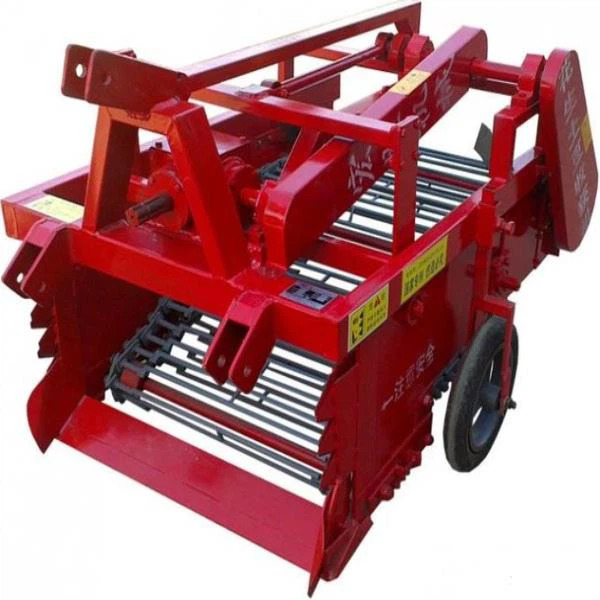
Potato Harvester Machine
ZHENGZHOU, HENAN, CHINA, October 10, 2026 /EINPresswire.com/ --
As agricultural producers worldwide seek to improve productivity, reduce labor requirements, and make better use of harvested crops, demand for practical and adaptable farm machinery continues to grow. Zhengzhou Runxiang Machinery Equipment Co., Ltd. is a Chinese machinery manufacturer that provides equipment for agricultural production, material processing, and related industrial applications. Its product portfolio includes farm machinery, grinding and mixing equipment, oil processing machinery, pellet production systems, drying equipment, and packaging solutions. By offering individual machines as well as customized production lines, the company serves farms, agricultural cooperatives, small processing businesses, and industrial customers looking to improve their operational efficiency.
The development of modern agriculture increasingly depends on the connection between primary production and post-harvest processing. Planting, harvesting, threshing, shelling, grinding, mixing, and oil pressing are all important stages in agricultural value chains. When these activities are performed with appropriate machinery, businesses can improve workflow consistency, reduce repetitive manual work, and process agricultural materials more efficiently. However, the most suitable equipment depends on crop type, production volume, available facilities, local operating conditions, and budget.
Against this background, Zhengzhou Runxiang Machinery Equipment Co., Ltd. focuses on providing equipment options for different agricultural and processing needs. Its offerings include Farm Machinery for field and crop-handling operations, along with the Grinding & Mixing Systems and Oil Milling & Pressing Lines that support the transformation of raw agricultural materials into more valuable products. The company's broader product range allows buyers to consider equipment for multiple stages of production rather than treating each processing requirement as an isolated investment.
Meeting the Changing Needs of Agricultural Businesses
Agricultural businesses operate under a range of practical constraints. Seasonal work creates periods of high demand for machinery, while labor availability, fuel costs, maintenance expenses, and fluctuating commodity prices can affect profitability. For small and medium-sized farms, investing in suitable machinery can help manage these challenges, particularly when equipment is selected according to actual production requirements.
Farm machinery covers a broad range of equipment used for planting, harvesting, threshing, shelling, and handling crops. Mechanized operations can help farmers complete time-sensitive work more consistently, especially during planting and harvesting seasons. For example, a thresher separates grains from harvested plants, while shelling machinery removes kernels from their outer shells. Harvesters and related equipment can reduce the physical workload associated with collecting crops and preparing them for subsequent processing.
The benefits of mechanization are not limited to large commercial farms. Small farms, cooperatives, and rural processing businesses may also benefit from compact machinery that can be operated by a limited workforce. In these settings, the right combination of capacity, power consumption, maintenance requirements, and ease of operation is often more important than selecting the largest available machine.
Zhengzhou Runxiang Machinery Equipment Co., Ltd. supplies different categories of agricultural equipment intended to support these practical requirements. Its farm machinery range includes equipment such as planters, harvesters, threshers, and shelling machines. Depending on the crop and intended use, buyers can assess different machine configurations to determine which option best matches their field conditions and processing objectives.
Grinding & Mixing Systems for Agricultural Material Processing
Grinding and mixing are fundamental operations in many agricultural and food-processing workflows. Crops and other raw materials frequently need to be reduced to a suitable particle size before they can be blended, formulated, pressed, or processed further. In animal-feed production, for instance, grain and other ingredients may require grinding before being combined into a consistent mixture. Similar preparation steps can be necessary in selected food-processing and biomass applications.
The Grinding & Mixing Systems offered by Zhengzhou Runxiang Machinery Equipment Co., Ltd. address these processing stages. Grinding equipment can reduce the size of suitable raw materials, while mixing machinery combines ingredients to help distribute them more evenly. The specific result depends on the machine design, raw-material characteristics, moisture content, operating parameters, and formulation.
In feed manufacturing, consistent material preparation is particularly important. Ingredients that vary substantially in particle size can influence mixing behavior and the quality of the finished feed. Appropriate grinding and mixing equipment can help producers establish a more repeatable workflow, although the required particle size and mixing duration must be determined according to the intended product.
These systems can also serve as part of a larger production line. Ground materials may move on to mixing, pelleting, drying, or packaging, depending on the application. Integrating equipment in a logical sequence can reduce unnecessary handling and help operators manage material movement between stages. For businesses planning a new facility, the layout of the production line should take into account equipment capacity, available floor space, storage arrangements, cleaning access, and the needs of downstream machinery.
When evaluating Grinding & Mixing Systems, buyers should consider the type of material being processed, target particle size, required throughput, motor power, and expected operating hours. Mixing capacity and uniformity are equally important where the final product requires a consistent formulation. Spare parts availability, access to wear components, and routine maintenance procedures should also be reviewed before purchasing.
A suitable configuration is rarely identical for every customer. Grain processing, animal-feed preparation, and biomass handling can involve different raw materials and performance requirements. A clear discussion of the intended application helps equipment suppliers recommend a practical arrangement and helps buyers avoid investing in unnecessary capacity.
Oil Milling & Pressing Lines Add Value to Oil-Bearing Crops
Oil-bearing crops provide an important source of edible oils and industrial raw materials. Depending on regional agricultural production, these materials may include peanuts, soybeans, rapeseed, sunflower seeds, sesame seeds, and other oil-rich seeds. Processing them into oil can create additional commercial opportunities for farms, agricultural cooperatives, and local processing enterprises.
The Oil Milling & Pressing Lines supplied by Zhengzhou Runxiang Machinery Equipment Co., Ltd. are designed for businesses investigating machinery for oil extraction and related processing operations. Oil milling and pressing typically involve several stages, which may include raw-material cleaning, preparation, pressing, filtration, and, where required, further treatment. The precise process depends on the crop, the desired oil characteristics, and the selected equipment configuration.
Preparation is an important part of oil processing. Removing unwanted foreign materials can help protect machinery and improve the consistency of subsequent operations. Depending on the seed, additional preparation may be required to achieve suitable moisture content, particle structure, or temperature before pressing. The pressing stage then applies mechanical force to separate oil from the prepared material.
After pressing, the crude oil may contain suspended particles or other impurities. Filtration and additional treatment can help prepare it for the intended use, while the remaining press cake may have value as a by-product when it meets relevant safety and quality requirements. The economic performance of an oil-processing operation therefore depends on more than the volume of oil produced. Raw-material costs, extraction efficiency, energy use, labor, product quality, and by-product management all contribute to the overall result.
For small and medium-sized processors, selecting an appropriately sized oil line is especially important. A machine that is too small may limit production during peak seasons, while oversized equipment can create unnecessary capital and operating costs. Buyers should consider daily raw-material availability, seasonal fluctuations, expected production hours, and the demand for the finished oil before choosing a configuration.
Oil Milling & Pressing Lines can also be assessed as part of a wider agricultural processing operation. For example, a business that already handles grain or oilseed crops may want to combine cleaning, pressing, filtration, and packaging equipment in a coordinated workflow. An integrated arrangement can simplify material handling and make it easier to plan production, provided that each machine's capacity and operating requirements are compatible.
Customization and Production-Line Integration
Modern agricultural processing facilities rarely depend on a single machine. Their operations often involve multiple stages, each of which must work at a compatible capacity to prevent bottlenecks. A high-capacity grinder, for example, may not improve overall output if the following mixer or packaging unit cannot handle the same volume. Likewise, an oil press may require suitable preparation and filtration equipment to maintain a steady workflow.
Zhengzhou Runxiang Machinery Equipment Co., Ltd. offers standalone machinery as well as customized production lines, according to its published company information. This approach gives customers flexibility when planning a new facility or upgrading an existing operation. Some businesses may need a single replacement machine, while others may require a coordinated line that includes raw-material preparation, processing, drying, and packaging.
Equipment selection should begin with a clear definition of the production objective. Customers need to identify the raw materials, desired output, working schedule, available utilities, and space limitations. They should also consider whether the process will operate continuously or in batches, how materials will be loaded and unloaded, and what level of operator involvement is practical.
Local conditions can affect equipment performance and installation. Voltage requirements, climate, material moisture, dust levels, and access to maintenance services should all be considered during the planning stage. For international buyers, confirming electrical specifications, language requirements for manuals, shipping dimensions, and installation arrangements can help reduce delays after delivery.
A customized production line should not be judged solely by the number of machines it contains. Its value depends on whether the complete arrangement meets the customer's production goals, allows safe and convenient operation, and can be maintained over time. Clear communication between the buyer and supplier is therefore an important part of successful machinery procurement.
Quality Control and After-Sales Considerations
The long-term performance of farm machinery depends on equipment design, manufacturing quality, correct operation, and regular maintenance. Agricultural equipment may be exposed to dust, vibration, variable weather, and demanding seasonal schedules. Processing machinery can also experience wear from abrasive materials or repeated operation. Buyers should therefore review the construction, protective features, maintenance intervals, and availability of replacement parts before making a purchasing decision.
Zhengzhou Runxiang Machinery Equipment Co., Ltd. states that it has manufacturing and technical teams and provides equipment configuration services for different customer requirements. Its website also describes export support, English-language operating manuals, remote technical assistance, and warranty services. The exact warranty period and service conditions should be confirmed in the quotation or purchase contract, as coverage can differ by product and agreement.
For overseas customers, after-sales support is particularly important. Installation guidance, clear operating instructions, troubleshooting assistance, and access to consumable or replacement components can help reduce downtime. Customers should also clarify which installation and maintenance tasks can be completed by their own staff and which may require specialist assistance.
Before shipment, buyers should request confirmation of the machine model, configuration, electrical specifications, included accessories, and any agreed performance requirements. Where applicable, they should also verify certification documents and ensure that the equipment complies with the regulations relevant to its intended market and application.
Training is another consideration. Operators need to understand startup and shutdown procedures, loading limits, cleaning requirements, and safety measures. Machinery involving rotating components, cutting mechanisms, hot surfaces, or high-pressure operations requires appropriate guarding and operating procedures. Regular inspection and preventive maintenance can help identify wear or damage before it affects production.
Serving International Agricultural Markets
Agricultural mechanization varies significantly between countries and regions. Some markets prioritize compact and affordable machines suitable for family farms, while others require larger processing lines capable of handling substantial volumes. Crop types, infrastructure, power availability, and local maintenance resources can also influence purchasing decisions.
Zhengzhou Runxiang Machinery Equipment Co., Ltd. reports that its equipment has been exported to markets across Africa, Europe, and Asia. International sales require suppliers to consider more than the machinery itself. Packaging, shipping coordination, export documentation, technical communication, and after-sales support can all affect the customer's experience.
For importers and distributors, a broad equipment portfolio may create opportunities to serve multiple customer segments. Farm machinery can address field operations, while grinding and mixing equipment can support material preparation and feed processing. Oil milling and pressing equipment can help businesses explore value-added processing for oil-bearing crops. The suitability of each machine, however, depends on local demand and the buyer's technical and commercial requirements.
A successful international project begins with realistic expectations. Buyers should confirm performance specifications in writing, understand the installation requirements, and discuss the availability of technical support before placing an order. Where production outcomes depend on crop variety or raw-material quality, testing representative materials can help establish whether a proposed configuration is appropriate.
Looking Ahead: Practical Machinery for Agricultural Value Chains
The future of agricultural machinery will be shaped by the need to improve productivity while managing costs, resource use, and product consistency. Farmers and processors are increasingly evaluating equipment as part of a connected value chain, from harvesting raw materials to preparing, processing, and packaging finished goods.
No single machine can solve every operational challenge. Effective mechanization requires equipment that matches the crop, processing method, available workforce, and expected output. Buyers must balance initial investment against operating costs, maintenance needs, reliability, and the potential value created by more efficient processing.
Zhengzhou Runxiang Machinery Equipment Co., Ltd. serves this market with a range of agricultural and processing machinery. Its Farm Machinery offerings support field and crop-handling activities, while Grinding & Mixing Systems and Oil Milling & Pressing Lines address important post-harvest and value-added processing stages. Together with its other production equipment, these product categories give customers several options to consider when planning agricultural operations or expanding processing capacity.
For prospective buyers, the most useful next step is a detailed review of production requirements, raw materials, equipment specifications, and service arrangements. With appropriate planning and a suitable machinery configuration, agricultural businesses can build processing workflows that are more consistent, manageable, and aligned with their long-term goals.
About Zhengzhou Runxiang Machinery Equipment Co., Ltd.
Zhengzhou Runxiang Machinery Equipment Co., Ltd. is a Chinese machinery manufacturer integrating research and development, production, and sales. Established in 2012 according to its company website, the business is based in Zhengzhou, Henan Province, China. Its product portfolio includes farm machinery, Grinding & Mixing Systems, Oil Milling & Pressing Lines, feed and wood pellet production equipment, industrial drying systems, packaging machinery, nut-processing equipment, and wood and bamboo processing lines. The company offers individual machines and customized production-line solutions for agricultural businesses, farms, cooperatives, and processing facilities. Its published service information includes equipment configuration support, export documentation, operating manuals, and remote technical assistance. More information about its products and services is available on the official website: www.rxpelletmachine.com
Address: A503, Xicheng Technology Building, No. 41 Jinsuo Road, High-tech Zone, Zhengzhou City, China
Official Website: https://www.rxpelletmachine.com/
Wang Shuang
Zhengzhou Runxiang Machinery Equipment Co., Ltd.
goldenmachinerysusan@gmail.com
Legal Disclaimer:
EIN Presswire provides this news content "as is" without warranty of any kind. We do not accept any responsibility or liability for the accuracy, content, images, videos, licenses, completeness, legality, or reliability of the information contained in this article. If you have any complaints or copyright issues related to this article, kindly contact the author above.
